Table of Contents
- What you need to know about goal-specific home gym equipment
- The four training goals and what they genuinely demand
- Common mistakes people make when shopping by goal
- What to look for when buying goal-specific equipment
- Goal specific equipment recommendations (fat loss, powerlifting, CrossFit, rehab): the framework
- Budget reality check: what you can build for under $500 or $1,000
- Product reviews
- Common questions answered
- What home gym equipment is best for fat loss and cardio-focused training?
- What equipment do I need to build a powerlifting home gym on a budget?
- What are the essential pieces for a CrossFit home gym setup?
- What home gym equipment is safe and effective for injury rehabilitation?
- How does equipment for fat loss differ from equipment for muscle building?
- What space and flooring requirements differ by training goal?
- Conclusion
Goal Specific Equipment Recommendations (Fat Loss, Powerlifting, Crossfit, Rehab)
TL;DR
For most home gym users, the Bowflex SelectTech 552 (~$349) is the best single versatile pick covering fat loss, CrossFit accessories, and rehab progressions; serious powerlifters should pair the CAP Barbell 300 lb Olympic Set (~$300) with a Rogue Ohio Bar Cerakote (~$320) upgrade for long-term strength gains.
Most home gym guides give you a list of popular equipment and call it a day. This guide does something different: it matches gear to your actual training goal, because Goal specific equipment recommendations (fat loss, powerlifting, CrossFit, rehab) look fundamentally different from one another. A powerlifter building out a home platform needs a stiff center-knurled barbell and 300 lbs of iron. A patient recovering from a shoulder injury needs accommodating resistance bands and a light neoprene dumbbell set. Treating these as interchangeable leads to either wasted money, a cluttered garage, or — in the worst cases — injury from mismatched tool and task.
This guide covers eight popular home gym products, from the budget-friendly Amazon Basics hex dumbbell to the premium Rogue Ohio Bar Cerakote, and maps each to the goal it actually serves best. We also address the questions competitors skip: space constraints for apartment gyms, goal transition planning as your fitness evolves, female-specific sizing considerations, and total cost of ownership across each discipline. Whether you have $400 or $1,000 to spend, you will leave with a clear shopping list — not just a ranking of what sells most on Amazon.
What you need to know about goal-specific home gym equipment
The four training goals and what they genuinely demand
Fat loss and cardio-focused training is built on metabolic conditioning: circuits, supersets, HIIT resistance work, and keeping your heart rate elevated for sustained periods. The equipment priority here is versatility and density — you need to move between exercises quickly without hunting for plates. Adjustable dumbbells that cover a wide weight range in small increments are ideal. Heavy barbell setups are largely unnecessary unless you are combining fat loss with meaningful hypertrophy work.
Powerlifting is the most equipment-specific goal on this list. The sport demands a competition-spec or near-competition barbell (stiff, 28–29 mm shaft diameter, dual knurl marks for IWF and IPF positioning), heavy iron plates in small increments, and a squat rack capable of holding your working loads. Cutting corners on the barbell itself — the tool you load most heavily and most often — is where overuse injuries and equipment failures happen. Budget plates are acceptable; a budget bar at serious loads is a genuine safety concern.
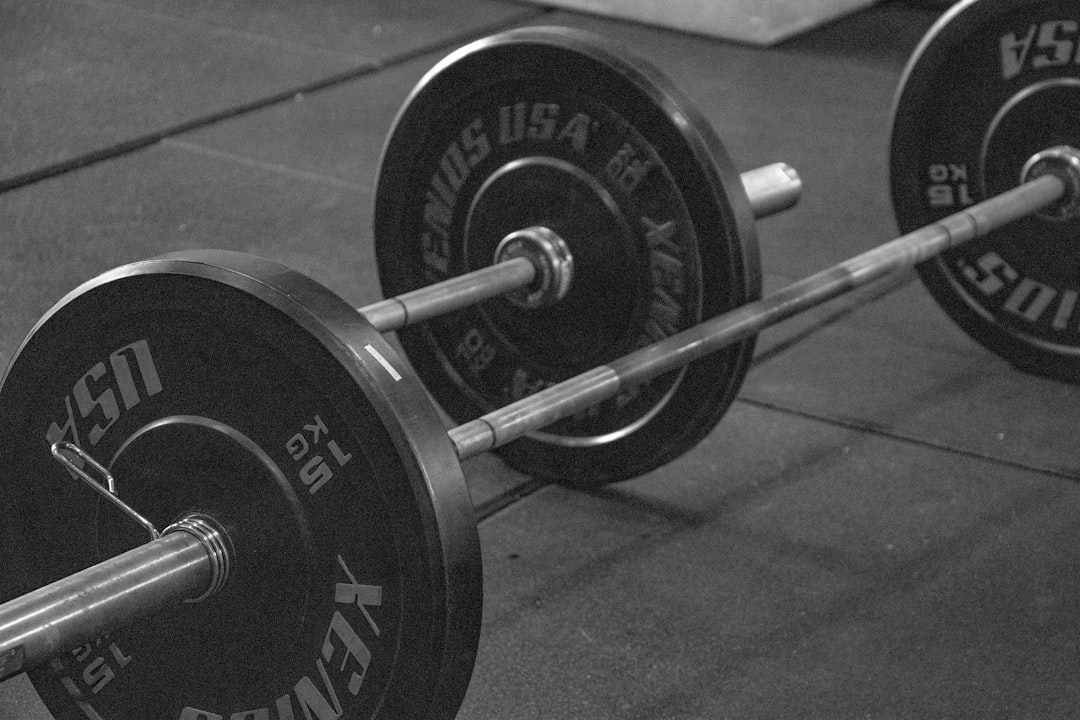
CrossFit and functional fitness sit between the two extremes. A full CrossFit setup includes a pull-up rig, a barbell capable of Olympic lifting (which requires sleeve rotation and some flex or “whip”), bumper plates for safe drops, and supplemental tools like kettlebells and gymnastics rings. Notably, CrossFit barbell requirements conflict slightly with powerlifting — CrossFit bars typically have more whip for the clean and snatch, while powerlifting bars are deliberately stiff. If you train both seriously, you will eventually want two bars.
Rehabilitation and injury recovery is the most overlooked training goal in equipment guides, yet it is the most commonly applicable. After a rotator cuff strain, knee surgery, or any overuse injury, the right equipment prioritizes controlled range of motion, proprioception, and progressive loading at low weights. Resistance bands — both loop bands and tube bands — are the cornerstone of early rehab because they create accommodating resistance: lighter at the vulnerable stretched position, heavier near full contraction where the joint is most supported. Light neoprene dumbbells bridge the transition back to free weight loading.
Common mistakes people make when shopping by goal
The single most expensive mistake is buying for who you want to be, not who you are right now. A beginner buying a Rogue barbell before they have established a safe squat pattern is likely to sustain a form-based injury long before the bar shows any wear. Conversely, someone serious about powerlifting who starts with adjustable dumbbells as a temporary barbell substitute will hit the weight ceiling within months and regret not investing in a real setup sooner.
A second common error is underestimating space requirements by goal. Fat loss and CrossFit training involve dynamic, multi-directional movement — box jumps, lateral shuffles, overhead presses from full extension. These activities require 8–10 feet of open floor space minimum, plus at least 8 feet of ceiling clearance. Powerlifting is surprisingly compact by comparison: a 7-foot bar footprint, plus clearance to rack and unrack safely. Rehab work is the most space-efficient discipline of all — a yoga mat and a band anchor are often sufficient for several months of programming.
Flooring requirements also differ by goal. CrossFit Olympic lifting involves dropping loaded barbells; this requires rubber flooring at least 3/4 inch thick to protect both the equipment and the subfloor. Powerlifting does not involve dropping, so standard 3/8-inch stall mats are adequate. For rehab, any non-slip surface works.
What to look for when buying goal-specific equipment
Understanding Goal specific equipment recommendations (fat loss, powerlifting, CrossFit, rehab) means evaluating each purchase against several practical criteria — not just price or brand recognition.
Durability and rated load capacity matter enormously for barbell purchases. Every bar has a stated tensile strength measured in PSI. Cheap import bars are often not tested or rated, which creates genuine uncertainty at heavy loads. For powerlifting, look for bars rated to at least 190,000 PSI tensile strength. For CrossFit Olympic lifting, confirm the bar has been tested for repeated drops. For dumbbell systems, check that the adjustment mechanism is rated for drop use — most are not, including the Bowflex SelectTech 552, which should be set down rather than dropped.
Progressive overload pathways are equipment requirements, not just programming decisions. Every training goal depends on gradually increasing resistance over time. For fat loss training, 2.5-lb dumbbell increments (as the Bowflex SelectTech 552 provides) cover virtually your entire training career. For powerlifting competition peaking, you need plate increments down to 1.25 lbs. For rehab, you need to bridge seamlessly from band-only resistance to 5-lb dumbbells without large jumps that stress recovering structures.
Grip and knurl quality affect both safety and training quality. For rehab and general fat loss, comfort is the priority — smooth neoprene or rubber coatings are appropriate. For powerlifting and Olympic lifting, knurl depth and pattern directly affect your ability to control a loaded bar at maximum effort. A passive machine-cut knurl that wears smooth quickly (common on budget bars under $100) is inadequate at 85–95% of your one-rep max. Aggressive medium knurl, like that on the Rogue Ohio Bar, is a meaningful upgrade that experienced lifters notice immediately.
Storage footprint is a practical constraint that disproportionately affects apartment and small-garage setups. Adjustable dumbbells win this category clearly — the Bowflex SelectTech 552 replaces up to 15 pairs of fixed dumbbells in the footprint of two. For barbell setups, wall-mounted plate storage and vertical bar holders significantly reduce the effective floor space required.
Goal specific equipment recommendations (fat loss, powerlifting, CrossFit, rehab): the framework
Before diving into individual product reviews, here is a practical summary of what each goal requires, what makes a useful addition, and what you can safely skip:
| Goal | Core equipment | Useful additions | Skip |
|---|---|---|---|
| Fat loss | Adjustable dumbbells, resistance bands | Jump rope, kettlebell | Heavy barbell set |
| Powerlifting | Olympic barbell, heavy plates, squat rack | 1.25 lb micro plates | Adjustable dumbbells |
| CrossFit | Olympic barbell, bumper plates, pull-up rig | Rings, kettlebells | Fixed neoprene sets |
| Rehab | Resistance bands, light fixed dumbbells | Foam roller, balance board | Heavy compound loading |
Budget reality check: what you can build for under $500 or $1,000
Under $500 for fat loss or rehab: The Bowflex SelectTech 552 ($349) plus a resistance band set like the Fit Simplify loops or Bodylastics tube bands ($20–40) covers nearly every exercise in these disciplines. Add a $15 jump rope and you have a complete fat loss setup for under $410.
Under $500 for powerlifting: The CAP Barbell 7-foot Olympic Bar ($80) combined with a standard plate set, or the CAP Barbell 300 lb Olympic Set ($300), gives you a functional starting point. A used squat rack from Facebook Marketplace or Craigslist ($100–150) rounds out the minimum viable powerlifting setup.
Under $1,000 for CrossFit: A mid-range barbell ($150–300), rubber bumper plates ($250), and a wall-mounted pull-up bar ($80) covers the major compound movements. Adjustable dumbbells fill in the gap for accessory work.
Product reviews
Adjustable Dumbbells
Bowflex SelectTech 552 Adjustable Dumbbells (Pair)
PROS
- Replaces 15 pairs of dumbbells in the footprint of two — ideal for any space under 200 sq ft
- 2.5 lb increments from 5 to 52.5 lbs support genuine progressive overload across fat loss and rehab goals
- Durable over-molded plastic housing holds up well with consistent regular use
- Dial adjustment takes under three seconds — fast enough for circuit training
CONS
- Selector mechanism can jam if the dumbbell is set down at an angle rather than flat
- 52.5 lb per-hand maximum is a ceiling advanced lifters will eventually hit
- Larger profile than fixed dumbbells makes single-arm floor exercises and Turkish get-ups awkward
Affiliate link — we may earn a commission at no extra cost to you.
What users say: Buyers consistently praise the dial system’s speed and the dramatic floor space savings versus a full fixed dumbbell rack. The most frequently reported issue is the selector mechanism sticking — which user reviews and repair guides confirm is nearly always caused by setting the dumbbell down off-center, not a manufacturing defect. Advanced lifters note hitting the 52.5 lb ceiling within 12 to 18 months of consistent training.
Fixed Dumbbells
Amazon Basics Rubber Encased Hex Dumbbell
PROS
- Among the lowest price-per-pound options available for rubber-coated fixed dumbbells
- Rubber encasing protects hardwood and tile floors and substantially reduces noise
- Weight accuracy is good — true to stated weight, unlike some lower-tier budget alternatives
- Simple and durable design with no mechanical components to fail
CONS
- Sold as individual units — building a full weight range becomes significantly expensive
- Fixed weight means purchasing separate pairs as strength progresses, with no transition path built in
- Rubber coating can emit a distinct chemical smell for several weeks after purchase
Affiliate link — we may earn a commission at no extra cost to you.
What users say: Reviewers emphasize durability above all — many report years of regular use with no cracking, splitting, or coating separation. The individual-unit pricing model is the most cited frustration, as buyers realize mid-program that they need three or four pairs to support a full training plan. For single-weight rehab protocols or as a supplemental dumbbell for a specific exercise, it is highly rated.
Adjustable Dumbbells
PowerBlock Elite EXP Adjustable Dumbbell Set
PROS
- Expandable to 90 lbs per hand with add-on kits — far exceeds the Bowflex 552 ceiling
- Rectangular block design stores significantly more compactly than the Bowflex platform
- All-steel construction with minimal moving parts — highly durable under heavy regular use
- Selector pin adjustment is straightforward and reliable under load
CONS
- Cage-style grip design feels unfamiliar compared to standard round dumbbells and can be awkward for neutral-grip floor press
- Weight adjustment takes longer than the Bowflex dial system — not ideal for fast circuit transitions
- Higher starting price point compared to the Bowflex 552 before considering expansion kits
Affiliate link — we may earn a commission at no extra cost to you.
What users say: CrossFit practitioners and intermediate strength athletes frequently choose the PowerBlock over the Bowflex for one reason: it goes meaningfully heavier. The expandability is repeatedly cited as a long-term value win — upgrading the same dumbbell body from 50 to 90 lbs without buying an entirely new set changes the cost calculus significantly. Some users need two to three weeks to adapt to the cage grip feel, but most report that it becomes natural quickly.
Dumbbell Sets
CAP Barbell Neoprene Dumbbell Set with Stand
PROS
- All-in-one convenience with a storage stand included — no separate rack purchase required
- Neoprene coating is gentle on both floors and joints, making it ideal for rehab and beginner fat loss work
- Color-coded weight identification speeds up circuit training and reduces setup time
- Compact storage footprint with the included upright rack
CONS
- Weight range typically tops out at 10–15 lbs per dumbbell, severely limiting long-term progression
- Neoprene coating can peel and crack with intensive daily use over 12 to 18 months
- Not suitable for CrossFit, powerlifting, or any serious strength training — a strictly entry-level and rehab tool
Affiliate link — we may earn a commission at no extra cost to you.
What users say: This set earns consistent praise from physical therapy patients, older adults re-entering exercise, and those returning from injury. The color coding and included stand are universally appreciated for making home workouts feel organized. The most consistent long-term complaint is outgrowing the weight range within a few months of consistent training — a near-certain outcome for anyone making real progress.
Adjustable Dumbbells
Ironmaster 75 lb Quick-Lock Adjustable Dumbbell System
PROS
- All-steel construction is the most durable adjustable dumbbell system on the consumer market
- Adjusts from 5 to 75 lbs per hand, expandable to 120 lbs — serves both intermediate and advanced lifters
- Traditional round dumbbell shape works with every exercise including floor press and Turkish get-up without modification
- Secure quick-lock collar mechanism has a legitimate track record under heavy eccentric loading
CONS
- Adjustment takes 15 to 30 seconds compared to under 5 for dial-type systems — a real limitation for circuit training
- High price point is difficult to justify for beginners who have not yet established consistent training habits
- Heavier total weight when stored makes repositioning less convenient than compact dial-type systems
Affiliate link — we may earn a commission at no extra cost to you.
What users say: Serious strength athletes and experienced CrossFit practitioners rate the Ironmaster as the most gym-like adjustable dumbbell experience available. The traditional round shape earns repeated specific praise — users note they do not need to modify their exercise technique the way the PowerBlock’s cage design occasionally requires. The slower adjustment speed is the only meaningful knock from reviewers, and most decide it is an acceptable trade-off for the weight range and feel.
Barbells & Weight Plates
CAP Barbell 300 lb Olympic Weight Set with Bar
PROS
- All-in-one solution — bar, plates, and collars included in a single purchase
- 300 lb total capacity covers beginner through solid intermediate powerlifting programming
- Accessible price point makes it the most practical first barbell setup for budget-conscious buyers
- Widely available and easy to supplement with additional plates as strength grows
CONS
- Included barbell is a basic spin bar without published PSI rating — not suitable for serious powerlifting loads long-term
- Cast iron plates have weight variance of up to ±3%, which matters for competition-standard programming
- Included spring clip collars should be replaced with lock-jaw collars for heavy compound lifts — an additional cost
Affiliate link — we may earn a commission at no extra cost to you.
What users say: This set is one of the most consistently reviewed budget starting points for first-time powerlifting home gyms. Buyers frequently report that it holds up well for one to three years of moderate training before bar quality becomes a limiting factor — which is exactly the expected lifespan at this price. The most common long-term feedback is a desire to upgrade the bar after six to twelve months, which is a predictable and reasonable upgrade path rather than a product failure.
Barbells & Weight Plates
CAP Barbell 7-Foot Olympic Barbell (Men's)
PROS
- Lowest entry price among full-length men's Olympic barbells — removes the budget barrier for first-time barbell buyers
- Standard 2-inch Olympic sleeves accommodate the full range of Olympic plates from any manufacturer
- Adequate for beginner and early intermediate compound lifts including squat, bench, and deadlift
- Works well as a dedicated second bar for accessory or warm-up use in a larger home gym
CONS
- PSI rating is not published by the manufacturer, creating legitimate uncertainty about safe maximum loads
- Knurl is minimal and polishes smooth quickly with regular chalk and sweat exposure
- Sleeves rotate on bushings rather than bearings, which limits performance for Olympic lifting and CrossFit cleans
- No center knurl makes high-bar and low-bar back squatting less secure
Affiliate link — we may earn a commission at no extra cost to you.
What users say: Buyers are generally satisfied at the price point, with most framing it explicitly as a budget training tool rather than a long-term investment. The lack of center knurl frustrates dedicated back squatters. A notable pattern in reviews is that the bar develops surface rust in humid or unheated garage gyms without regular maintenance — a practical concern for anyone in a wet climate without climate control in their training space.
Barbells & Weight Plates
Rogue Ohio Bar Cerakote 20 kg Olympic Barbell
PROS
- 190,000 PSI tensile strength shaft handles elite-level powerlifting and Olympic lifting loads without flex
- Cerakote finish resists rust, chalk buildup, and sweat corrosion across years of heavy use — virtually eliminates maintenance concerns
- Dual knurl marks (IPF and IWF spec) serve both powerlifting and Olympic lifting without compromise
- Made in Columbus, Ohio — quality control and consistency are meaningfully superior to most imported bars at similar price points
CONS
- Premium price point represents a significant investment that beginners do not yet need and will not fully use
- Aggressive medium knurl becomes hard on hands during high-rep CrossFit workouts without chalk or gloves
- Overkill for anyone not yet training consistently at intermediate or advanced levels — the quality outpaces most users early in their training
Affiliate link — we may earn a commission at no extra cost to you.
What users say: The Rogue Ohio Bar Cerakote is among the most reviewed premium barbells on the market, and the user sentiment is unusually consistent: exceptional knurl feel, no perceptible flex at submaximal loads, and finish quality that shows minimal wear after years of intensive use. The near-universal caveat is equally consistent — it is a serious long-term investment that beginners simply do not need yet, but that experienced lifters almost never regret once they commit to it.
Comparison: Goal specific equipment recommendations (fat loss, powerlifting, CrossFit, rehab)
| Product | Rating | Price | Pros | Cons | |
|---|---|---|---|---|---|
| Best Pick Bowflex SelectTech 552 | ★★★★★ | ~$349 |
|
| Check Price |
| PowerBlock Elite EXP | ★★★★★ | ~$399 |
|
| Check Price |
| Ironmaster 75 lb Quick-Lock | ★★★★★ | ~$499 |
|
| Check Price |
| Amazon Basics Hex Dumbbell | ★★★★★ | ~$25 |
|
| Check Price |
| CAP Neoprene Set with Stand | ★★★★★ | ~$120 |
|
| Check Price |
| Rogue Ohio Bar Cerakote | ★★★★★ | ~$320 |
|
| Check Price |
| CAP Barbell 300 lb Set | ★★★★★ | ~$300 |
|
| Check Price |
| CAP 7-Foot Olympic Bar (Men's) | ★★★★★ | ~$80 |
|
| Check Price |
- Replaces 15 dumbbell pairs
- 2.5 lb increments
- Covers 3+ training goals
- 52.5 lb ceiling
- Mechanism can jam
- Expandable to 90 lbs
- Compact steel build
- Reliable selector pin
- Slower to adjust
- Cage grip is polarizing
- Traditional dumbbell shape
- Up to 120 lbs expandable
- All-steel construction
- 15–30 sec adjustment
- Highest price in category
- Best value per pound
- Rubber encased
- Weight accurate
- Sold individually
- No built-in progression
- Includes storage rack
- Joint-friendly coating
- Color-coded weights
- 10–15 lb max per hand
- Neoprene wears over time
- 190k PSI tensile strength
- Cerakote corrosion resistance
- Dual IPF/IWF knurl marks
- Premium price
- Aggressive knurl in high reps
- All-in-one starter setup
- 300 lb capacity
- Easy to supplement
- Unpublished bar PSI
- ±3% plate weight variance
- Lowest price entry bar
- Standard 2-inch sleeves
- Serviceable for beginners
- No center knurl
- Minimal knurl quality
Common questions answered
What home gym equipment is best for fat loss and cardio-focused training?
For fat loss, the priority is keeping your heart rate elevated throughout the session and enabling fast transitions between exercises. Adjustable dumbbells — specifically the Bowflex SelectTech 552 — are the single most versatile investment because they support circuit training, supersets, and HIIT resistance work across a wide weight range. Pair them with a resistance band set like the Fit Simplify loop bands or the Bodylastics 14-piece tube set for mobility work, activation exercises, and pull movements that dumbbells alone do not cover well. A jump rope adds pure cardio capability for under $20. You do not need a barbell or heavy plates for fat loss training — that money is better saved for when your goals shift toward strength.
What equipment do I need to build a powerlifting home gym on a budget?
Start with the CAP Barbell 300 lb Olympic set, which includes a bar, plates, and collars for approximately $300. Source a used squat rack from a local resale marketplace for $100–200 and you have a complete entry-level setup. The planned upgrade path matters here: when you are ready to invest further, replace the bar first. The Rogue Ohio Bar Cerakote is a lifetime purchase that will outlast multiple budget bars and eliminate the equipment uncertainty that comes with unrated import bars under heavy load.
What are the essential pieces for a CrossFit home gym setup?
The CrossFit foundation is a pull-up rig or wall-mounted bar, an Olympic barbell with rubber bumper plates (cast iron plates are not appropriate for overhead drops), and a dumbbell or kettlebell option for accessory work. Resistance bands — specifically tube bands with handles, like the Bodylastics 14-piece set — add band pull-apart and mobility work that is core to CrossFit warm-up programming. Note that CrossFit Olympic lifting requires a barbell with genuine sleeve rotation. The CAP budget bar has bushing-based rotation adequate for beginner use; the Rogue Ohio Bar handles it at a premium level.
What home gym equipment is safe and effective for injury rehabilitation?
Resistance loop bands, such as the Fit Simplify set, are the safest starting point for most rehab protocols because accommodating resistance is joint-friendly at vulnerable angles. Tube bands with handles add more resistance range for later-stage rehab. The CAP Barbell Neoprene Dumbbell Set bridges the transition back to free weight loading once basic stability is restored. The critical principle for rehab equipment is to avoid anything that creates compressive joint loading before the tissue is ready — meaning heavy barbells, Olympic lifting, and any loaded movement at end range of motion should wait until cleared by a physical therapist or sports medicine professional.
How does equipment for fat loss differ from equipment for muscle building?
The equipment overlap is larger than most people expect — dumbbells, bands, and barbells serve both goals. The difference is primarily in load range and rest structure. Fat loss training uses lighter loads, shorter rest periods, more exercise variety, and continuous movement. Muscle building requires heavier progressive loading and longer rest intervals between sets. The Bowflex SelectTech 552’s 5–52.5 lb range covers most fat loss and moderate hypertrophy work. Serious muscle building eventually requires a barbell for the compound movements — bench press, squat, and deadlift — that allow the heaviest absolute loading.
What space and flooring requirements differ by training goal?
Rehab training needs the least physical space — a standard yoga mat footprint (roughly 6 x 2 feet) is adequate for most protocols. Powerlifting requires approximately 7 x 7 feet for a bar and rack, with sufficient ceiling height to stand upright with the bar in a rack. Fat loss circuit training and CrossFit are the most space-intensive: a minimum of 10 x 10 feet of open floor space and 8 feet of ceiling clearance for overhead pressing. For flooring, CrossFit Olympic lifting requires at least 3/4-inch rubber for dropped bumper plates; powerlifting manages with standard 3/8-inch stall mats; rehab requires only a non-slip surface.
Can I build a goal-specific home gym for under $500?
What equipment overlaps between CrossFit and powerlifting home gyms?
Are adjustable dumbbells like the Bowflex SelectTech 552 good for multiple training goals?
What resistance band setups work best for rehab versus strength training?
Is there female-specific guidance for goal-based equipment selection?
Conclusion
Choosing home gym equipment without a clear goal is one of the most reliable ways to spend money on gear that does not fit your actual training. This breakdown of Goal specific equipment recommendations (fat loss, powerlifting, CrossFit, rehab) is designed to eliminate that problem by giving you a direct path from goal to purchase, with honest assessments of what each product actually delivers.
For fat loss: The Bowflex SelectTech 552 and a resistance band set — under $400 total — is a complete, versatile setup that will serve most training programs for years. It is the right first purchase for the majority of general fitness home gym buyers.
For powerlifting: The CAP Barbell 300 lb Olympic Set is the honest budget entry point, and the Rogue Ohio Bar Cerakote is the planned long-term upgrade that eliminates the compromises of budget bars once your training demands it. Buy the budget set now; save for the Rogue.
For CrossFit: The PowerBlock Elite EXP handles dumbbell accessory work at the weight range CrossFit requires, and pairing it with an appropriate barbell, bumper plates, and a pull-up rig covers the major compound and gymnastic movement patterns. Prioritize bumper plates early — CrossFit drops are part of the sport, not the exception.
For rehab: Start light and progress slowly. Resistance loop bands, tube bands, and the CAP Neoprene Dumbbell Set are the appropriate tools. Avoid the temptation to move to heavier free weight loading before basic movement stability is restored — the cost of a setback is far higher than the cost of being patient.
The most durable principle across all four goals: buy for the athlete you are today, not the one you plan to be in two years. Build in phases, upgrade purposefully, and your home gym will grow with your fitness rather than ahead of it.